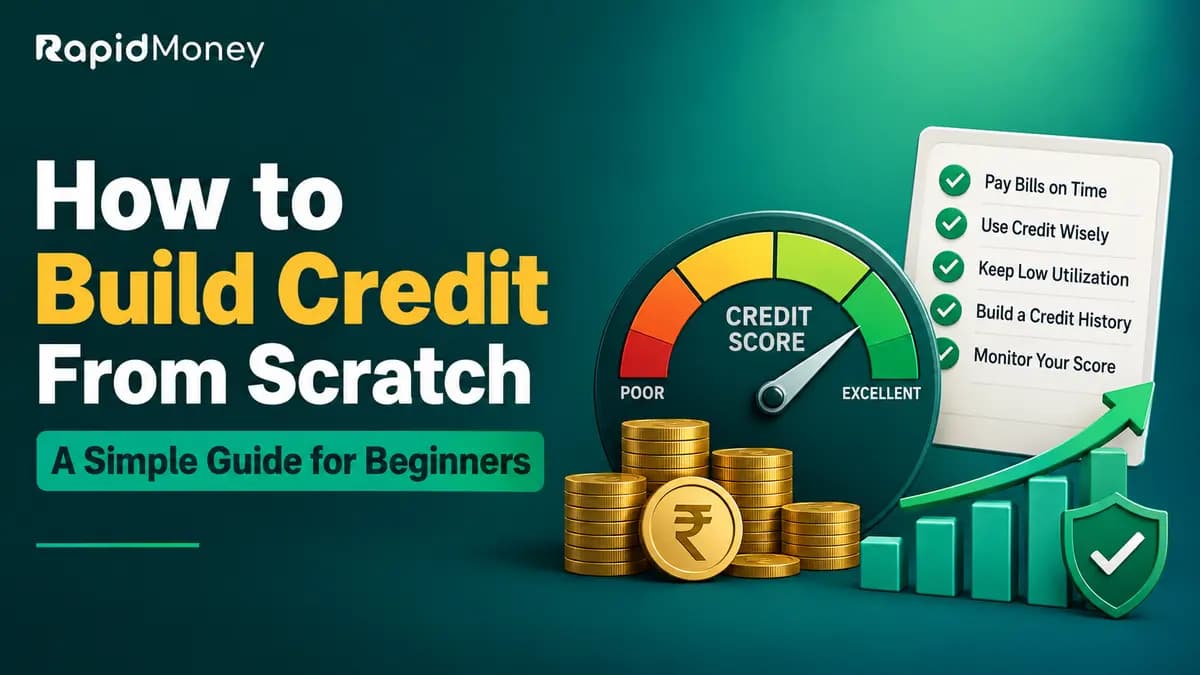
To build credit from scratch, open a secured credit card or become an authorized user, pay every bill on time, keep your credit utilization below 30%, and let your history grow for at least six months before checking your score.
Starting with zero credit history can feel like a locked door. No lender wants to take a chance on you, yet you can't build a track record without a lender taking that chance first.
The good news is that learning how to build credit from scratch is simpler than most people expect. This guide will take you through each practical action, instrument, and timetable so you can begin creating a sound financial foundation today.
A credit score affects far more than loan approvals. It influences your rent applications, insurance premiums, and even certain job offers.
Without credit history, lenders have no way to judge your reliability. This is often called being "credit invisible," and it affects millions of young adults and newcomers every year.
Building credit early on from the ground up will give you better interest rates, bigger limits, and financial freedom down the road.
Also Read|Difference between secured and unsecured personal loan›
Building credit from scratch isn’t difficult, it just requires time and persistence. Follow these instructions if you want to get the finest outcomes.
Start with one of these beginner-friendly options, since traditional unsecured cards are hard to get without history.
Payment history is the single biggest factor in your score. Set up autopay or calendar reminders so you never miss a due date.
Try to keep your available credit limit utilization under 30% at all times. Lower utilization, ideally under 10%, signals even stronger financial discipline.
Every new application generates a hard query, which can cause your score to drop temporarily. Space applications some months out.
Check your report for errors, fraud, or missed updates. Reviewing your own report counts as a soft inquiry and has no negative impact.
Once you get your score think about opening an installment loan in addition to your revolving credit card. A healthy balance can add to your profile.
Also Read|How to get a personal loan with low credit score›
Even well-intentioned beginners slip up. Watch out for these common pitfalls.
Most beginners see an initial score appear within three to six months of opening their first account. However, a genuinely strong score takes longer to develop.
| Timeline | What Typically Happens |
|---|---|
| Month 1–3 | Account opens and reports; no score yet |
| Month 3–6 | Initial score generated (often "thin file") |
| Month 6–12 | Score stabilizes with consistent payments |
| Year 1–2 | Score strengthens as history lengthens |
| Year 2+ | Access to better rates and higher limits |
Financial advisors often recommend a few extra habits that accelerate progress beyond the basics.
Also Read|How to Improve Cibil Score before applying for personal loan›
Get a secured credit card or a personal loan and be sure to pay all your bills on time and keep your balance low. This action will result in most bureaus developing an initial score within three to six months.
The fastest way to build credit from scratch is to use a secured credit card, pay bills on time, keep credit utilization below 30%, and maintain a consistent credit history.
Most scores are between 300 and 900. That’s a great starter score with a short credit history, particularly the first year, when you may expect to be in the 650-700 range.
No.A soft inquiry, such as when you check your own report or score, does not influence your credit score, unlike a hard inquiry from a lender when you apply for credit.
One account is enough to begin with. Once you’ve built six to twelve months of positive history, you might want to explore establishing a second account to diversify your credit mix
It is one of the fastest and most reliable because most issuers report activities to the main credit bureaus on a regular basis, helping your file expand with every on-time payment.
The most damaging are late or missed payments, closely followed by severe credit utilization. Both can be avoided with automated payments and cautious budgeting.
Learning how to build credit from scratch comes down to a few repeatable habits: open the right starter account, pay on time every month, and keep your utilization low.
The only shortcut is consistency, although that’s easier than it sounds. Start with one account, be consistent and your credit file will build nicely over the next few months.