Got some extra cash and wondering whether to pay off your personal loan early? You're not alone.
Every year, thousands of borrowers in India face the same dilemma: should they make a personal loan prepayment in small chunks, or close the entire loan at once through foreclosure?
This will impact your interest payments, credit score and monthly budget. This guide breaks down the two options in plain language, compares real numbers and helps you figure out which one actually saves more money in 2026.
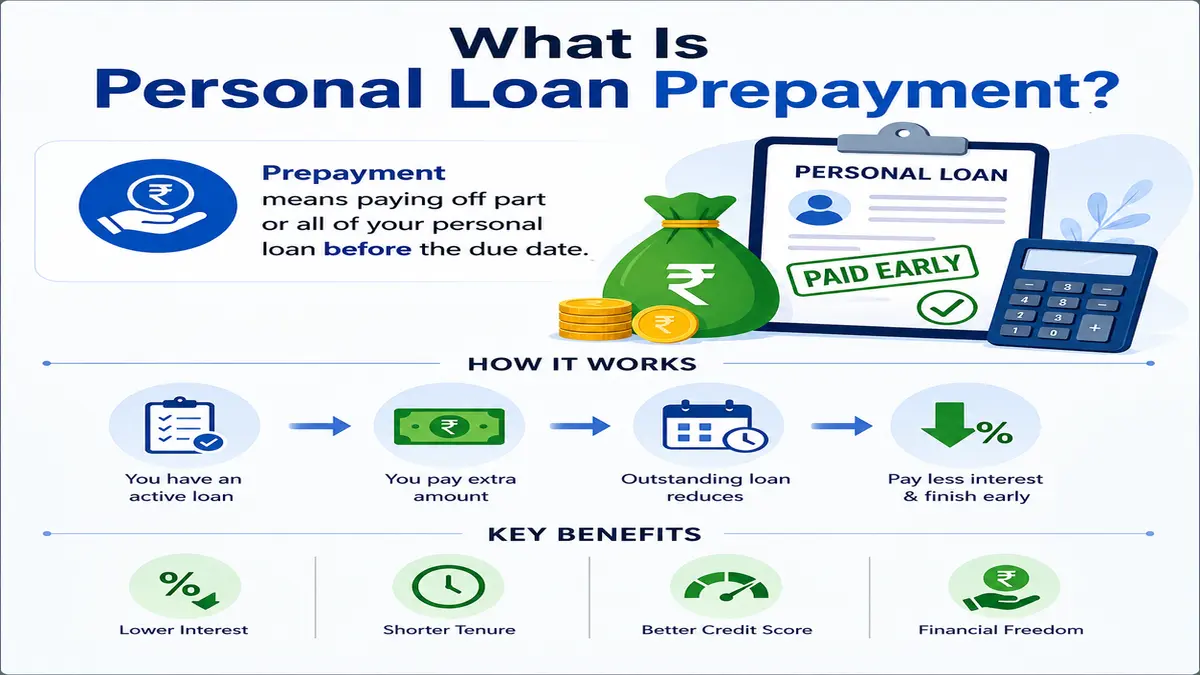
Personal loan prepayment is when you pay an extra amount over and above your regular EMI to reduce the outstanding principal.
You continue the loan, but with a smaller balance, which means less interest going forward.
Prepayment can be done partially — once, twice, or multiple times during the loan tenure — depending on your lender's policy.
Most banks and NBFCs permit partial prepayment after a lock-in period, which is generally 6 to 12 months from the date of disbursal.
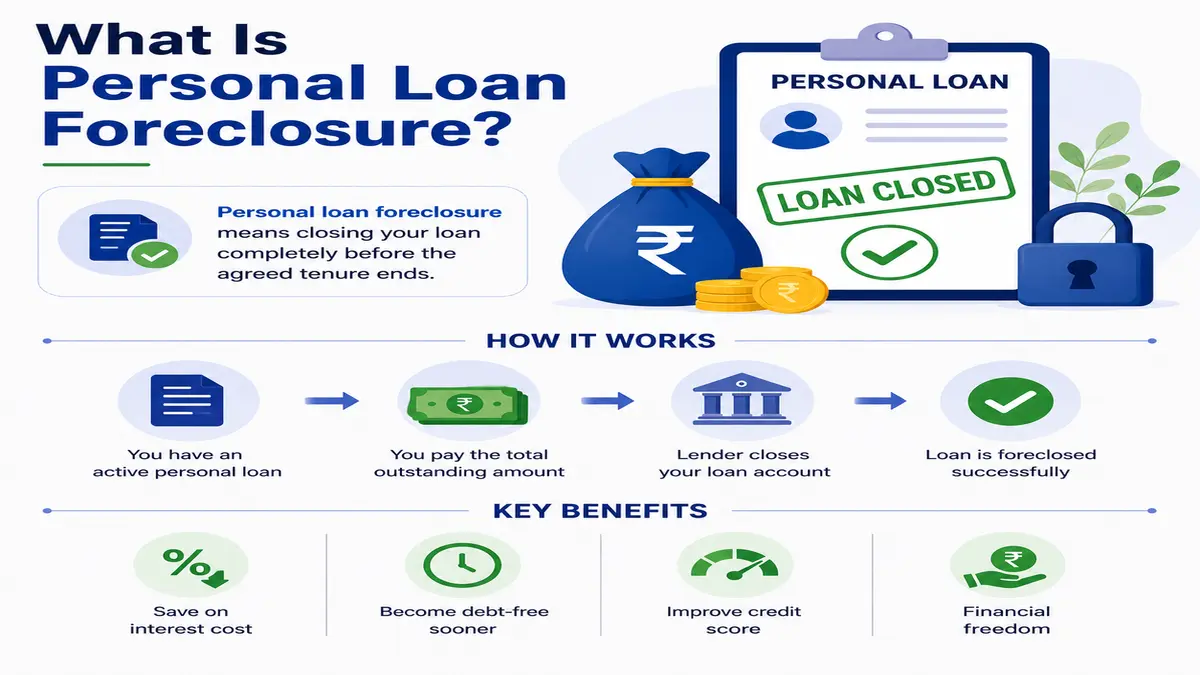
 What Is Personal Loan Foreclosure?
Foreclosure of loan is a situation where the entire outstanding loan amount is paid before the tenure of the loan is complete.
Once you foreclose, the loan account is closed permanently, and you stop paying EMIs altogether.
This is different from prepayment, which only reduces the balance while keeping the loan active.
Foreclosure is usually the better route when you have a lump sum — like a bonus, maturity amount, or inheritance — and want to be debt-free faster.
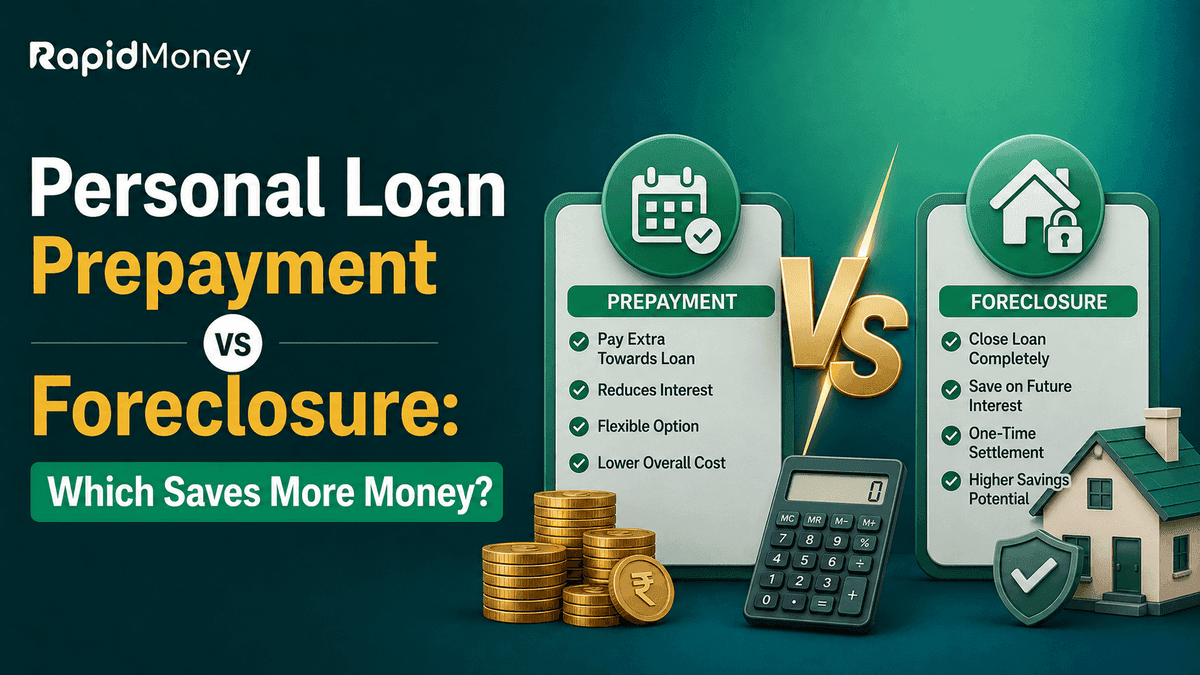
 Prepayment and Foreclosure: Key Differences
| Parameter | Prepayment | Foreclosure |
|---|---|---|
| Loan Status | Stays active | Closed completely |
| Amount Paid | Partial, extra amount | Full outstanding balance |
| EMI After Payment | Reduces (or tenure shortens) | No more EMIs |
| Interest Savings | Moderate, ongoing | Maximum, immediate |
| Charges | Usually 2%–4% on prepaid amount | Usually 2%–5% on outstanding principal |
| Best For | Partial extra funds | Lump sum availability |
| Credit Score Impact | Positive, gradual | Positive, immediate "closed" status |
| Flexibility | High, can repeat | One-time event |
Lenders charge a fee because early repayment reduces the interest income they expected to earn.
For fixed-rate personal loans, banks are free to charge foreclosure or prepayment penalties as per their policy.
No foreclosure or prepayment charges can be imposed by banks or NBFCs on floating-rate personal loans availed by individuals for non-business purposes.
Important Note: Most personal loans in India are fixed-rate, so this RBI relief mostly applies to floating-rate products.
| Lender Type | Foreclosure Charges | Prepayment Charges |
|---|---|---|
| Public Sector Banks | 2%–3% of outstanding principal | 2%–3% |
| Private Banks | 3%–5% of outstanding principal | 2%–4% |
| NBFCs/Fintech Lenders | 2%–6% of outstanding principal | 2%–5% |
| Floating-rate loans (individual, non-business) | Nil (as per RBI norms) | Nil |
Plus applicable GST on the charged amount.
| Criteria | Typical Requirement |
|---|---|
| Minimum tenure completed | 6–12 EMIs paid |
| Loan status | No overdue payments |
| Prepayment amount limit | Often capped at 25%–50% of outstanding per year (varies by lender) |
| Foreclosure notice period | 7–15 days advance intimation, as per lender |
| Applicable loans | Term loans; some flexi/overdraft loans have different rules |
Most lenders want a lock-in period of 6 to 12 months from the date of loan disbursement.
You typically cannot foreclose or prepay during this period, even if you have the funds ready.
Check your loan sanction letter for the exact lock-in duration before planning your payoff strategy.
Rohan had taken a personal loan of ₹4,00,000 at the rate of 13% for 4 years. In 18 months he got a bonus of Rs 1.5 lakh.
He had two choices: to partially payback ₹1,50,000 or wait and save more to foreclose the entire ₹2,80,000 debt six months later.
Using an online calculator, he found that prepaying immediately saved him more in interest than waiting, since interest accrues daily on the outstanding balance.
He chose to prepay right away and reduced his remaining tenure by over a year, saving roughly ₹28,000 in total interest.
Lesson: Acting sooner — even with a partial amount — often beats waiting for a "perfect" lump sum to foreclose.
1. What is the difference between personal loan prepayment and foreclosure?
A prepayment is an extra payment on your loan while it is live, which reduces the amount you owe. Foreclosure is paying the full remaining balance all at once , and closing the loan forever . Prepayment just cuts the future interest . Foreclosure ends all interest immediately .
2. Which saves more money, prepayment or foreclosure?
Foreclosure frequently saves more overall interest because it pays off the whole loan sum at once. But if you can’t swing the full lump sum, regular partial prepayments still offer a considerable continuous saving throughout the life of the loan.
3. Are there charges for personal loan foreclosure in 2026?
Yes, most fixed-rate personal loans charge a foreclosure fee of 2% to 5% on the outstanding principal plus GST. In general, the RBI guidelines do not apply to floating-rate loans taken by individual, non-business borrowers.
4. Can I prepay my personal loan anytime?
Most of the lenders permit prepayment only after a lock in period of 6 to 12 months from the date of disbursement. Then, most lenders allow you to prepay many times, but some have limits on the amount or how often you can do it every year.
5. Does foreclosing a personal loan improve my credit score?
Yes, foreclosure can have a positive impact on your credit score. Foreclosure reduces your total debt load. It also improves your credit utilisation ratio. This loan account will appear as “closed” on your credit report, which is a good sign to lenders.
6. Is it better to prepay early or late in the loan tenure?
Prepayment saves far more money because interest is front-loaded in most EMI schemes. Most of the interest has been paid, so not much savings in prepaying in the last year.
7. Should I use my emergency fund to foreclose a personal loan?
It's generally not advisable to fully drain your emergency fund for foreclosure. Keep at least 3–6 months of expenses aside, and use surplus funds beyond that for prepayment or foreclosure.
8. How long does it take to close a loan after foreclosure payment?
Most Lenders take 7-15 working days to process the foreclosure and give the NOC shortly. Credit bureaux normally report the “closed” update 30 to 45 days after payment.
Choosing between personal loan prepayment vs foreclosure ultimately comes down to how much money you have available and how quickly you want to be debt-free.
Foreclosure generally saves more in total interest since it clears the entire outstanding balance at once, even after accounting for foreclosure charges.
Prepayment, on the other hand, offers flexibility for borrowers who can only spare extra funds occasionally rather than a full lump sum.
Whichever path you choose, run the numbers first — compare the interest you'll save against the charges you'll pay — before making the final call.
Ready to take action? Check your loan statement today, calculate your potential savings, and talk to your lender about the best repayment option for your situation.