Applying for a loan on your phone takes just a few minutes. However, getting money quickly does not mean you should ignore the details. Some loan apps in India hide their charges, ask for upfront payments, or collect personal information they do not need.
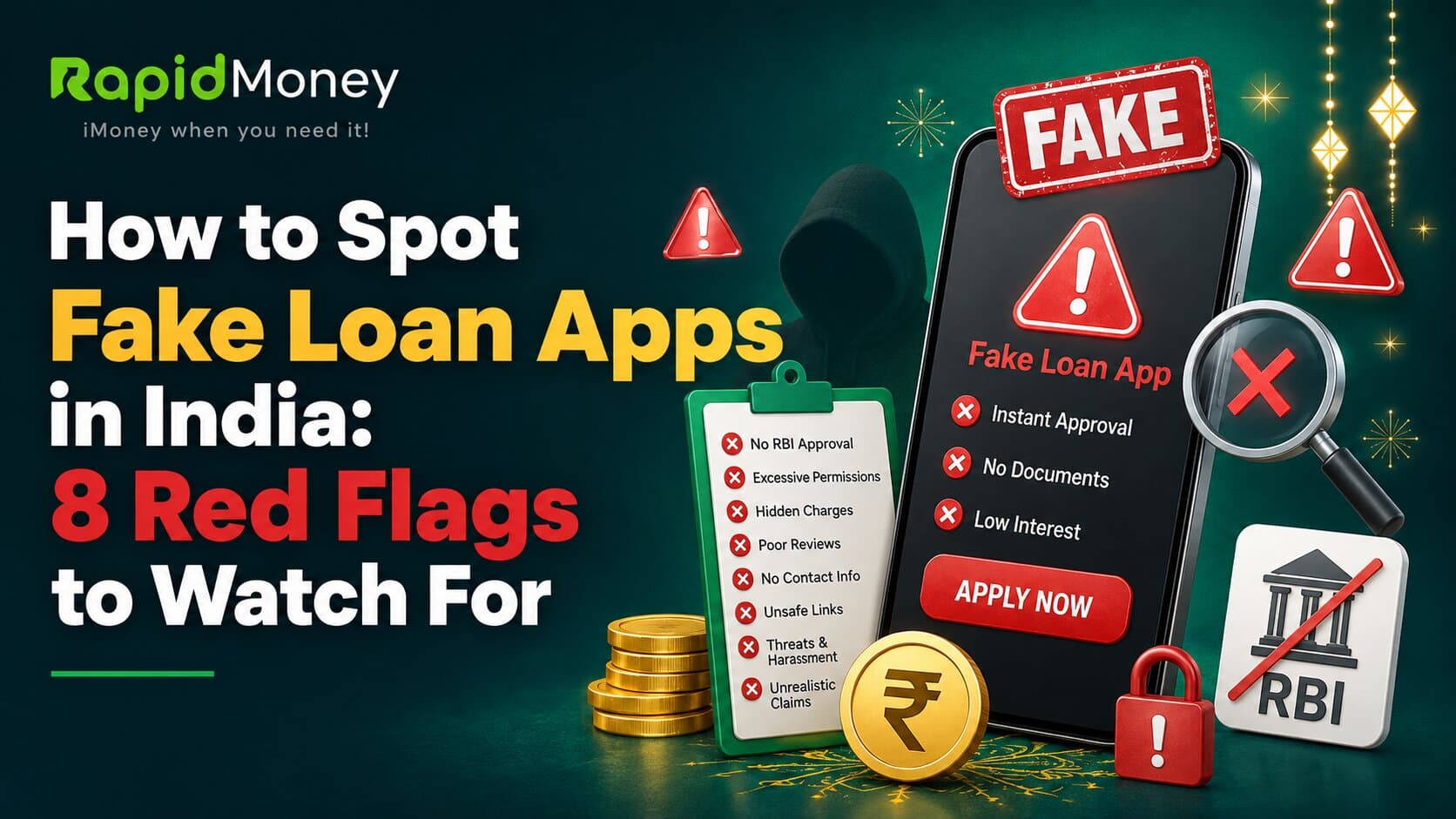
The difficult part is that a fake loan app in India can look genuine. Before you apply look closely at the company behind the offer. These eight red flags will help you avoid a fake lending experience.
Fake loan apps in India mislead people with loan offers or dishonest practices. Some collect money without giving the promised loan. Others misuse information or pressure borrowers with threats.
Not every unfamiliar app is fraudulent. The important question is whether the app is truly connected to a lender and whether its loan terms are clear.
1. The App Promises Approval for Everyone
An app that promises a loan to everyone regardless of income or repayment ability deserves a look. Lenders normally assess your situation before deciding whether to approve an application.
What to check: Read the eligibility conditions. Do not assume that an instant approval promise means the loan is genuine.
2. You Must Pay an Unexplained Fee
Imagine paying a fee to release your loan and then receiving nothing. This is a warning sign of loan app fraud in India.
Some legitimate loans in India have processing fees. The difference is that the charges should be disclosed clearly and you should know who receives your payment.
What to check: Verify the fee with the lender. Be cautious if someone asks you to transfer money to an account to approve or release your loan.
3. The Actual Lender Is Not Named
An app may display an offer without clearly explaining which company will lend you the money. That is a problem because you need to know who is responsible for your loan.
What to check: Find the bank or Non Banking Financial Company (NBFC) named in the offer. Confirm the apps association through the lenders website.
4. The App Requests Unnecessary Phone Access
A loan application may need certain details to verify your identity. However access to your contact list call logs or personal files without a reason should raise concerns.
The RBIs digital lending guidelines place restrictions on access to phone resources. Require need-based data collection with appropriate consent.
What to check: Review the permissions and privacy policy before installing an app. Do not share information simply because the app asks for it.
5. The Interest Rate Looks Low. The Charges Are Unclear
A low advertised interest rate does not tell you the full cost of borrowing. Processing fees and other charges can increase the amount you repay.
What to check: Read the Key Fact Statement, which explains the costs and terms of a loan. Check the percentage rate, fees, repayment schedule and total amount payable before accepting the offer.
6. You Receive Threats Over Repayment
A lender may remind you about a missed payment, but abusive messages, threats or attempts to shame you are different. Such behaviour should not be ignored.
What to check: Save messages, screenshots and call records. Report threatening behaviour to the authorities rather than responding to pressure, with an unexplained payment.
7. There Is No Way to Contact the Company
If you cannot find the lender's contact details or complaint process, resolving a problem could become difficult.
What to check: Look for a website, customer support details and a grievance redressal officer. Verify the information independently of relying only on details provided in a message.
8. The Offer Comes Through an Unknown Link
A WhatsApp message or SMS that says you can make money may lead you to a fake website or a suspicious app. The message might use a known company name to look trustworthy.
What to check: Do not download loan apps from links. Find the lender’s website and verify the loan app before you share documents or financial details.
People looking for RBI approved loan apps should know that a claim of RBI approval does not prove the loan app is legitimate.
Start by identifying the lender. Check its status through official sources and confirm that the loan app is linked to the lender on the lender’s website. The RBI also provides [ lending guidance](https://www.rbi.org.in/) for borrowers.
If you are thinking about a loan through Rapid Money review Rapid Money’s identity, eligibility requirements, charges and repayment terms through Rapid Money’s official channels. These checks apply to any loan provider.
If you have lost money or suspect that an app has misused your information, act quickly.
Contact your bank if you made a payment. Keep transaction details, messages and screenshots as evidence. Report suspected cybercrime through the [National Cyber Crime Reporting Portal](https://cybercrime.gov.in/).
If you have lost money through suspected financial cyber fraud, call 1930 as soon as possible. You can also report lending activity through the RBI’s [Sachet portal](https://sachet.rbi.org.in/) where applicable.
Choosing a loan app requires more than comparing how quickly it promises to send money. You need to know who is lending you the money, what the loan will cost and how your information will be used.
Before applying through Rapid Money or another provider, verify the lender. Read the terms carefully. A few checks before borrowing can help you avoid mistakes.
Check for fees, unclear lender details, unnecessary phone permissions and unrealistic promises. Always verify the lender before sharing information.
No. Do not assume every loan app is approved or endorsed by the RBI. Check whether the real lender is regulated and confirm its association with the loan app through sources.
Save the messages. Call records, then report the threats to the appropriate authorities. If you have lost money through suspected cyber fraud, contact your bank. Call 1930 promptly.
You can report suspected cybercrime through the National Cyber Crime Reporting Portal. For financial cyber fraud involving lost money, call 1930 as soon as possible.