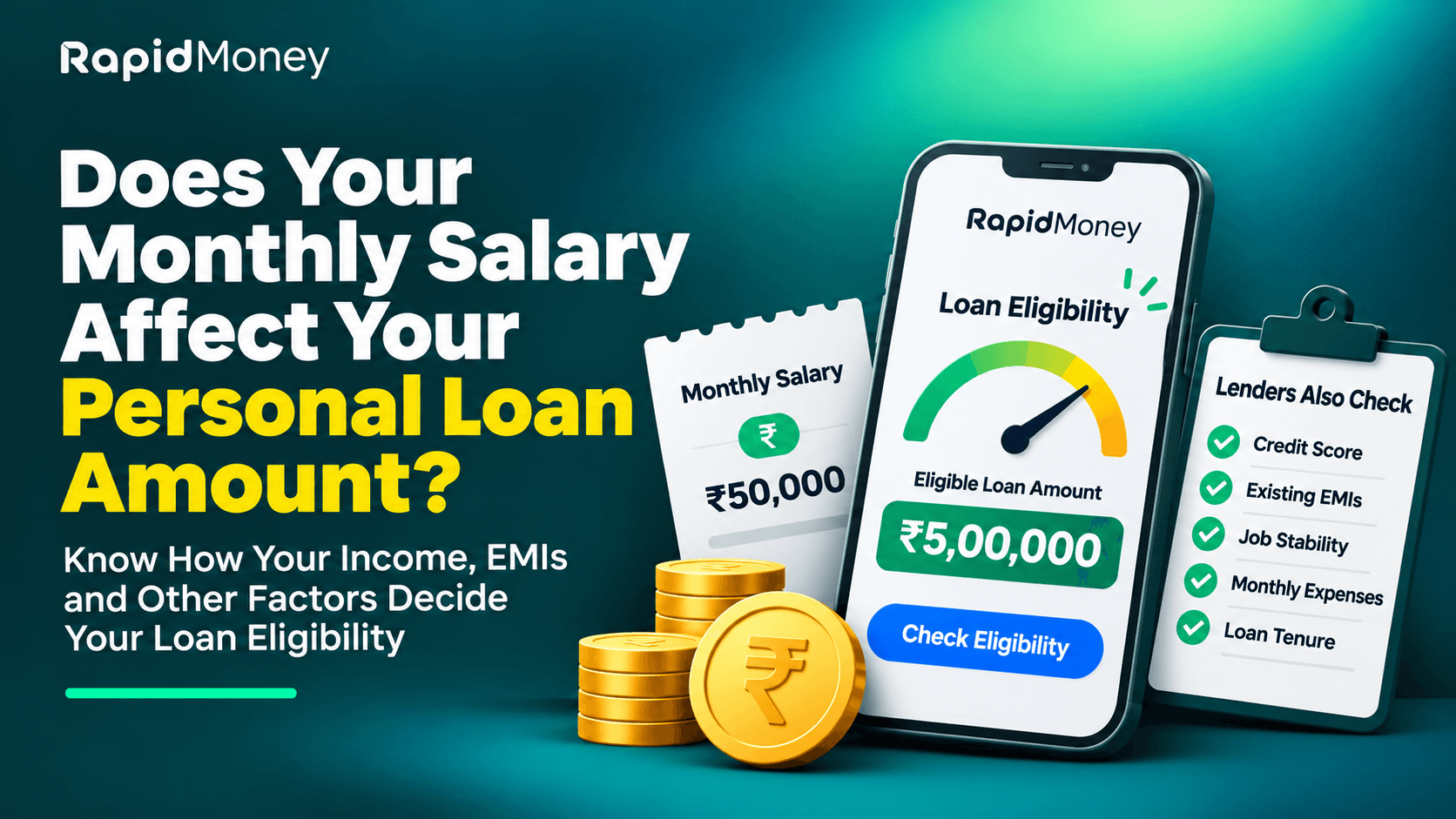
Are you planning to take a loan but unsure of how much you can borrow? Your monthly salary plays a role in determining how much you qualify for. Lenders want to be sure you can repay the loan without facing stress. That means they look at more than your income. Your existing EMIs, credit score and monthly expenses also matter. Let’s explore how your salary influences your personal loan amount and what you should check before applying.
How Does Your Monthly Salary Affect Your Personal Loan Amount?
Your salary gives lenders a picture of your repayment capacity. For example, someone earning ₹50,000 per month may be eligible for a loan than someone earning ₹20,000.. This is not always true.
Imagine you earn ₹50,000 but already pay ₹20,000 in EMIs for loans. You may qualify for a loan than someone earning the same amount with no existing debt.
So what really matters is not how much you earn but how much is left after your regular financial commitments. That’s why lenders focus on your income.
What Is the Minimum Salary for a Personal Loan?
There is no fixed salary for a personal loan in India. Each lender has its rules. Some lenders accept applicants with monthly incomes while others require higher salaries.
Your job type, credit history and other loans you already have can also impact your eligibility. Before applying always check the lender’s income requirements. This helps you know if you qualify before you start the application process.
How Much Personal Loan Can You Get Based on Your Salary?
Your personal loan amount by salary depends on your income and how much of it is already used for payments.
Here’s a sample table to show how it works:
| Monthly Salary | Existing EMIs |
|---|---|
| ₹20,000 | ₹3,000 |
| ₹30,000 | ₹5,000 |
| ₹40,000 | ₹10,000 |
| ₹50,000 | ₹15,000 |
| ₹60,000 | ₹10,000 |
These numbers are just examples. They do not represent limits. The actual loan amount you can get depends on your expenses, credit profile, interest rates, repayment period and the lender’s rules.
What Do Lenders Check Before Approving a Loan?
Your salary is important. It is not the only factor. Here’s what lenders also look at:
1. Credit Score: Your credit score shows how well you’ve managed loans and credit cards in the past. Keeping your EMIs on time helps keep your score high.
2. Existing EMIs: If you already pay EMIs for a car, bike or another loan that reduces the amount you can borrow. Lenders want to make sure you can manage payments without overburdening yourself.
3. Employment Stability: Lenders check how long you’ve been employed and whether you have a source of income. A stable job improves your chances of approval.
4. Monthly Expenses: Rent, utilities, groceries and other regular costs affect how much you can afford to pay toward a loan each month.
5. Loan Tenure: A longer repayment period means EMIs. You may end up paying more in interest over time.
How Can You Calculate Your Personal Loan Eligibility?
Not sure how much you can borrow? Use a loan amount eligibility calculator.
For example if you borrow ₹1,00,000 at 12% interest for 24 months your monthly EMI will be around ₹4,707.
Compare this with your income and expenses. See if the EMI fits your budget.
Keep in mind: a calculator gives an estimate. The final loan amount depends on the lender’s evaluation and approval process.
How Can You Improve Your Personal Loan Eligibility?
If you want to increase your chances of getting a loan here are some steps you can take:
• Pay your existing EMIs on time.
• Clear any loans whenever possible.
• Avoid applying for loans in a short time.
• Choose a loan amount that matches your budget.
• Check the lender’s eligibility requirements before applying.
Conclusion
Your monthly salary does affect which personal loan you may qualify for. Lenders also look at your credit score, existing EMIs, job stability and expenses.
Before applying through Rapid Money or any other lender check the eligibility criteria. Use a loan amount eligibility calculator to estimate your EMI. Pick a loan amount you can repay without stressing your budget.
FAQs
1. Does a higher salary mean a personal loan amount?
Not always. A higher salary may help you qualify for a loan but your existing EMIs, expenses and credit history also play a role.
2. What is the minimum salary for a loan in India?
There is no minimum. Each lender sets its income requirements.
3. Can I get a loan with a ₹15,000 monthly salary?
It may be possible with lenders who accept lower-income applicants. Approval depends on the lender and your ability to repay.
4. How can I check my salary eligibility, for a loan?
Check the lender’s income requirements. Use a loan amount eligibility calculator to estimate your eligibility.
5. Do existing EMIs affect my personal loan amount?
Yes. Existing EMIs reduce the amount of money you can use for loan repayments. This can lower the loan amount you qualify for.