When you need money for a big expense — like a medical bill, wedding shopping, home renovation, or even a sudden travel plan — the first question most Indians ask is:
Should I use my credit card, EMI card, or take a personal loan?
On the surface, all three look similar. They give you instant access to money. But in reality, they work very differently — and choosing the wrong one can cost you much more in interest, fees, and long-term stress.
Let’s break it down in a simple, practical way so you can decide what actually works better for your situation.
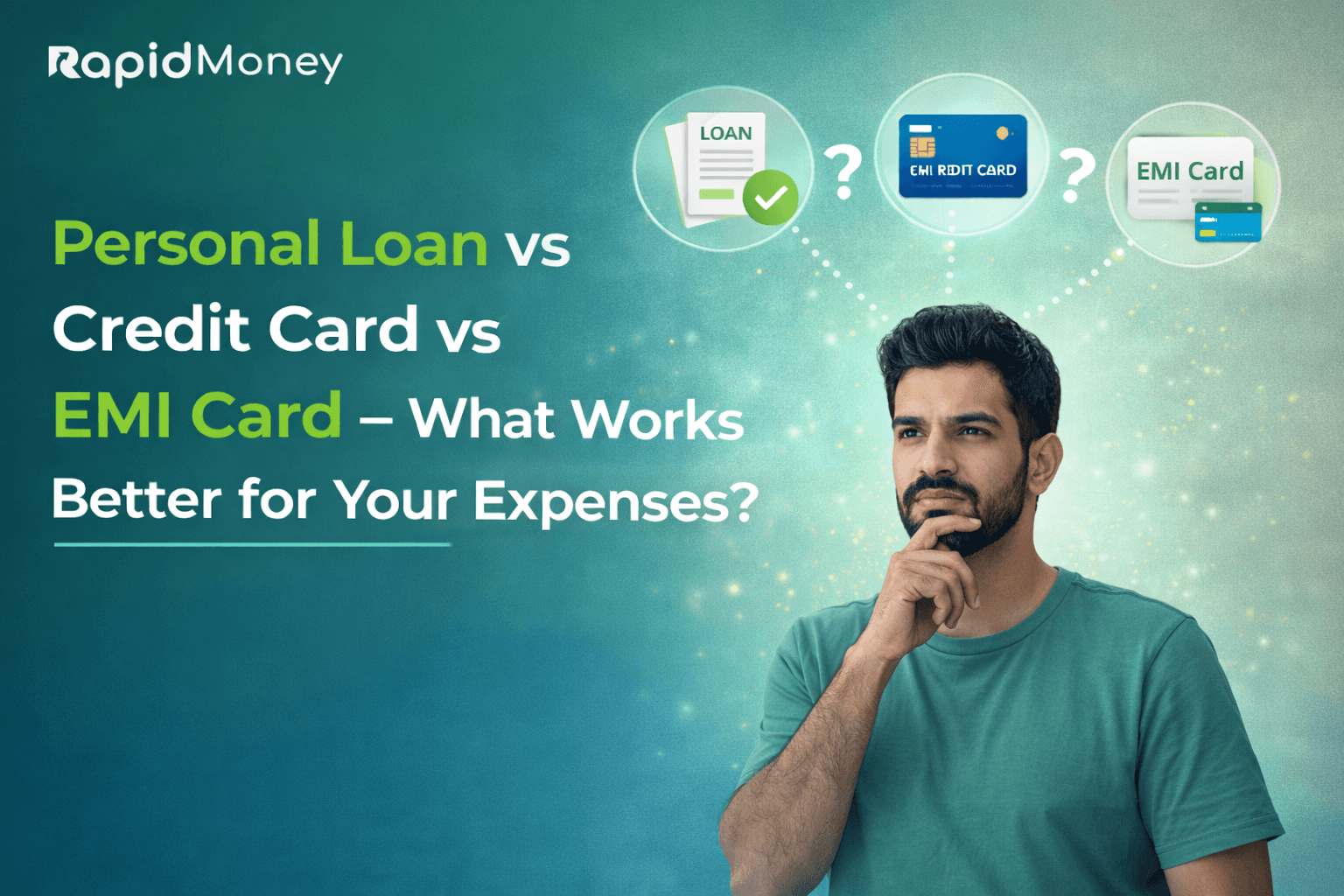
A personal loan is a lump-sum amount you borrow from a bank or NBFC and repay in fixed EMIs over a set period (usually 6 months to 5 years).
A credit card lets you spend up to your credit limit and repay later.
EMI cards allow you to convert purchases into EMIs at partner stores.
| Feature | Personal Loan | Credit Card | EMI Card |
|---|---|---|---|
| Best for | Big expenses | Short-term spends | Shopping at partner stores |
| Interest Rate | Lower | Very high (36%–48% annually) | Medium |
| Flexibility | Very high | Medium | Low |
| Cash Access | Yes | Limited | No |
| Repayment | Fixed EMI | Flexible but risky | Fixed EMI |
| Overspending Risk | Low | High | Medium |
If you’re dealing with a large or planned expense, a personal loan is usually the smarter choice.
Why personal loans are better here:
This is why many people search for “when to take loan instead of credit card” — because for big amounts, credit cards become very expensive.
Credit cards can be useful — if used smartly.
Key rule:
If you can pay the full bill before the due date, credit cards can be almost interest-free.
But if you only pay the minimum due — that’s where trouble starts. Interest piles up very fast.
This is why many people regret using credit cards for big expenses.
EMI cards are mainly for product purchases, not general expenses.
So EMI cards are useful — but only in specific shopping scenarios.
This is a common search: “EMI vs personal loan India”
Here’s the truth:
For large expenses, personal loans usually win on total cost.
Using Credit Card:
Using Personal Loan:
This is why for emergencies or big spends, personal loans are usually safer.
Here’s a simple rule of thumb:
✅ Expense is large
✅ You need cash in bank
✅ You want lower interest
✅ You want fixed, predictable EMIs
✅ Amount is small
✅ You can repay in full
✅ You want short-term flexibility
✅ Buying from partner store
✅ Product-specific purchase
✅ No better personal loan option
Credit cards and EMI cards are convenient — but convenience often comes at a cost.
For serious expenses, a personal loan is usually more affordable, structured, and safer for your long-term finances.
That’s why more Indians today are comparing personal loan vs credit card India before making big decisions — and choosing what truly fits their budget, not just what’s instantly available.
If you’re planning a big expense, always calculate:
Smart borrowing today = peaceful finances tomorrow.
In most cases, yes. Personal loans usually have much lower interest rates compared to credit cards. Credit cards can charge 36% to 48% annual interest if you don’t pay the full bill. For large or long-term expenses, a personal loan is usually cheaper.
You should consider a personal loan instead of a credit card when:
This is why many people search for “when to take out a loan instead of a credit card” — to avoid high card interest.
It depends on the situation. EMIs on EMI cards are good for specific product purchases. But for cash needs, medical bills, weddings, or renovations, a personal loan is more flexible and often cheaper overall.
For small, short-term emergencies, a credit card can help if you repay quickly. But for bigger emergencies like hospital bills, a personal loan is usually better because of lower interest and structured repayment.
Sometimes, but not always. While EMI options may reduce monthly burden, the total cost can still be high due to interest, processing fees, and GST. Always check the total payable amount before converting to EMI.
Yes, many people use personal loans for debt consolidation. A personal loan can help close multiple high-interest credit card dues and replace them with one lower-interest EMI, making repayment easier to manage.
Not always. Many “no-cost EMI” offers include hidden costs like:
For long-term borrowing, a personal loan is usually safer because:
Credit cards are better for short-term, disciplined use.
Yes. Both affect your credit score. Timely EMI payments can improve your score, while missed payments can hurt it. Multiple credit card EMIs and high utilization can also negatively impact your CIBIL.
Ask yourself:
If the amount is big and repayment is long-term, a personal loan is usually the better choice.